The Silent Threat: Why Early Detection is Critical for Swine Health
The global swine industry is a cornerstone of the agricultural economy, yet it constantly faces the formidable challenge of infectious diseases. Conditions like Porcine Reproductive and Respiratory Syndrome (PRRS), African Swine Fever (ASF), and various respiratory and enteric diseases can sweep through a herd with devastating speed, leading to massive economic losses, compromised animal welfare, and significant operational disruption. Traditional disease detection methods—relying on visual inspection, behavioral changes, or the onset of clinical signs—are often reactive. By the time a farmer notices a sick pig, the infection may have already spread, making containment difficult and costly.
The economic toll is staggering. Studies estimate that PRRS alone costs the U.S. pork industry over $1.2 billion annually, primarily through lost productivity and mortality. This reality underscores an urgent need for a paradigm shift: moving from reactive disease management to a proactive, non-invasive, and continuous monitoring system. This is where the power of advanced technology, specifically thermal imaging (TI), combined with intelligent farm management solutions like Trackfarm, is revolutionizing swine health.
The Science Behind the Scan: How Thermal Imaging Works
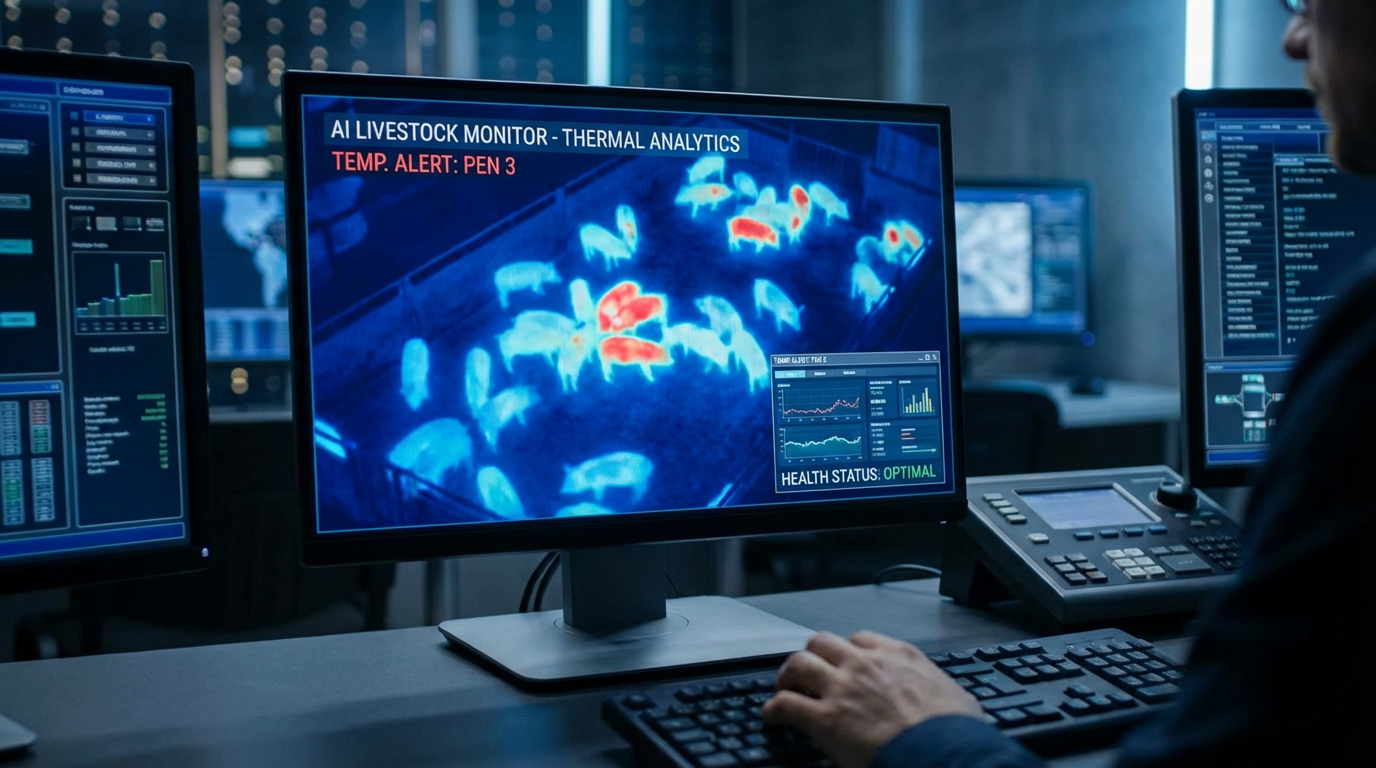
Thermal imaging, or infrared thermography (IRT), is a non-contact technology that measures the infrared radiation emitted by an object and converts it into a visual image, known as a thermogram. In a biological context, this radiation is directly related to the surface temperature of the animal.
The fundamental principle is simple: when a pig is fighting an infection or experiencing inflammation, its immune system triggers a response that often involves changes in blood flow (vasodilation or vasoconstriction) and an increase in core body temperature—a fever. These physiological changes manifest as localized or systemic temperature variations on the skin surface. A thermal camera can detect temperature differences as small as 0.1°C, long before a fever is palpable or a pig exhibits visible symptoms.
This capability offers a profound advantage over traditional methods:
- Non-Invasive: It causes no stress or disturbance to the animals, allowing for continuous, natural monitoring.
- Objective and Quantitative: It provides measurable, numerical data on temperature, eliminating the subjectivity of human visual assessment.
- Pre-Clinical Detection: It can identify thermal anomalies that signal disease onset days before clinical signs appear.
Trackfarm’s Integrated Intelligence: Beyond the Camera
Trackfarm is not just a thermal camera; it is a comprehensive smart livestock farming solution that integrates multiple data streams to create a holistic view of herd health. The system employs high-resolution thermal imaging cameras strategically placed throughout the barns, capturing continuous temperature data for every animal.
However, raw thermal data is only half the story. The true innovation lies in Trackfarm’s proprietary Artificial Intelligence (AI) engine. This engine processes the thermograms in real-time, performing several critical functions:
- Individual Pig Identification: Using computer vision, the AI tracks and identifies individual pigs, ensuring that temperature data is logged against a specific animal’s health record.
- Baseline Establishment: The system learns the normal thermal signature and behavioral patterns of the herd and individual pigs, establishing a healthy baseline.
- Anomaly Detection: It constantly compares real-time thermal readings against the established baseline. A sudden, sustained temperature spike in a specific area (e.g., a joint, the ear base, or the flank) triggers an immediate alert.
- Environmental Context: Trackfarm cross-references thermal data with environmental factors (ambient temperature, humidity, ventilation) to distinguish between a disease-related fever and a temperature increase due to external heat stress.
This integrated approach transforms thermal data into actionable intelligence, allowing farm managers to isolate and treat a single sick animal before the pathogen has a chance to spread to the entire group.
Pinpointing the Problem: Thermal Signatures of Key Swine Diseases
Thermal imaging is proving to be an invaluable tool for detecting a range of swine health issues, each often presenting a unique thermal signature:
1. Respiratory Diseases (e.g., PRRS, Swine Influenza)
Respiratory infections often lead to systemic fever. Trackfarm’s TI can detect an overall elevation in body surface temperature, particularly around the eyes, ears, and flank. Early detection is crucial, as respiratory diseases are highly contagious and can severely impact growth rates and feed efficiency.
2. Lameness and Joint Issues
Inflammation in joints (arthritis, injuries) is characterized by localized heat. The thermal camera can pinpoint these “hot spots” with high precision, allowing for early intervention with anti-inflammatory treatments or adjustments to the pig’s environment, preventing chronic pain and mobility issues.
3. Mastitis in Sows
For breeding sows, mastitis (inflammation of the mammary glands) is a serious concern that affects both the sow’s health and the survival of her litter. TI can clearly show the localized, elevated temperature of an infected gland, enabling treatment before the condition becomes severe and milk production is permanently damaged.
4. Digestive and Enteric Issues
While less direct, systemic fever associated with severe enteric diseases (like E. coli or Salmonella) can be detected. Furthermore, behavioral changes, such as reduced movement or huddling, which are also monitored by Trackfarm’s AI, often correlate with thermal anomalies, providing a multi-layered detection system.
The Economic and Welfare Benefits of Proactive Monitoring
The implementation of a system like Trackfarm delivers tangible benefits across the entire farming operation, impacting both the bottom line and ethical standards.
Economic Advantages
| Benefit Category | Traditional Method | Trackfarm with Thermal Imaging |
|---|---|---|
| Disease Detection | Reactive (after clinical signs) | Proactive (pre-clinical stage) |
| Treatment Cost | High (mass medication, severe cases) | Low (targeted, early intervention) |
| Mortality Rate | Higher (due to delayed diagnosis) | Significantly reduced |
| Growth Rate/FCR | Compromised (due to widespread illness) | Maintained (healthy herd) |
| Labor Efficiency | High (time spent on visual checks) | Low (AI-driven alerts, focused checks) |
| Antibiotic Use | High (preventative or mass treatment) | Reduced (precision treatment) |
By catching disease early, farmers can switch from costly mass medication to targeted, individual treatment. This not only saves money on veterinary bills and pharmaceuticals but also reduces the overall use of antibiotics, a critical factor in combating antimicrobial resistance (AMR) in the livestock sector.
Animal Welfare and Sustainability
Beyond economics, Trackfarm promotes superior animal welfare. Early detection means less suffering for the individual animal and a quicker return to health. The non-invasive nature of the monitoring process reduces stress on the herd. Furthermore, by optimizing health and reducing mortality, the system contributes to the sustainability of the farm, ensuring resources are used efficiently to produce healthy, high-quality protein.
Case Study: The Power of Precision Intervention
Consider a typical scenario on a large finishing farm. A pig develops a low-grade fever due to the initial stages of a respiratory infection. In a traditional setting, this pig might go unnoticed for 2-3 days until it starts coughing or refusing feed, by which time it has likely infected its pen-mates.
With Trackfarm, the thermal camera detects a 1.5°C temperature elevation around the pig’s ear base at 3:00 AM. The AI flags the anomaly, and the farm manager receives an alert by 6:00 AM. The manager can then use the system’s visual data to locate the specific pig immediately. A quick, targeted check confirms the early stage of the infection. The pig is isolated and treated with a minimal dose of medication.
The result: The infection is contained to a single animal. The rest of the pen remains healthy, their growth trajectory is unaffected, and the farm avoids the cost and disruption of a full-pen outbreak. This level of precision intervention is the hallmark of the Trackfarm solution.
The Future of Swine Farming is Smart and Thermal
The integration of thermal imaging into smart farming solutions represents a major leap forward for the swine industry. It addresses the core vulnerability of modern intensive farming—the rapid spread of disease—by providing an unprecedented level of visibility into the health status of every animal, 24 hours a day.
Trackfarm is leading this charge, turning complex thermal data into simple, actionable insights. As the technology continues to evolve, we can expect even greater integration with other biometrics and environmental controls, creating fully autonomous health monitoring systems. The future of swine farming is not just about maximizing yield; it is about maximizing health, welfare, and sustainability through intelligent, non-invasive technology.
For producers looking to secure their operations against the unpredictable threat of disease, reduce costs, and demonstrate a commitment to the highest standards of animal welfare, the adoption of thermal imaging technology is no longer a luxury—it is a necessity. Trackfarm provides the intelligence to make that necessity a reality.
Conclusion: A New Era of Proactive Health Management
The journey from visual inspection to AI-driven thermal monitoring marks a significant milestone in livestock management. Trackfarm’s solution empowers farmers with the ability to detect the earliest whispers of disease, transforming potential crises into minor, manageable incidents. By embracing this technology, the swine industry can look forward to a future characterized by greater stability, improved profitability, and healthier herds.